
 Photo: The Rio Times
Argentina's October inflation rises to 2.2%, above forecasts
The higher monthly reading, which exceeded analyst expectations, keeps price pressure in focus for the Milei government's economic policy and for markets.
 Ambassador Kirk Wagar (Ret)Partner

Last Tuesday voters sent two messages. One went to Washington, where Democrats took control of Congress. The other went to town halls, county commissions and state capitals, and it was about data centers. Counts differ by tracker and the results are unofficial, but by the Ballotpedia-based tallies I have seen, voters chose the option that limited development in 40 of the 41 local measures on the ballot. Twenty-one of those were in Ohio, and most were in places that happen to put the question to a vote, so I would not call it a national referendum. The industry still should not wave it away.
I believe America can build the computing capacity it needs. There are plenty of places where large data centers can go without turning a residential street, a farm community or a small city’s power system into the front line. The companies have to find those places, pay the full cost of serving them, be honest about land and water, and leave the community with something it can point to afterward.
Most of this is a math problem. Electricity costs money. So do transmission lines, water, roads, backup generation, and the risk that a customer never uses the power it asked a utility to build. The benefits can be counted too: investment, tax receipts, construction work, permanent jobs, and sometimes a new use for land that would otherwise sit empty. Nearly all of those numbers can be put on the table before anyone votes on a rezoning.
Not all of it is math. People have to believe the developer told them the truth, and that the decision is being made with them rather than around them. A community that has stopped trusting you will not be moved by a spreadsheet. So the real question after these midterms is whether the companies spending these sums are willing to do the unglamorous work of reconciling AI with the communities that host it.
I would be careful about reading Tuesday as a rejection of the technology. Americans use data centers every day, when they run a business, see a doctor or stream a movie, and the national security and economic arguments for building here are real. The administration’s 2025 AI Action Plan made faster construction of data centers, and the energy to run them, an explicit national goal.
What people object to is more specific. They don’t want to find out their electric bill is going up to pay for a private company’s substation. They don’t want a diesel generator yard near their homes, a cooling system competing for scarce water, or farmland rezoned before anyone explained the project. And they don’t want local officials signing confidentiality agreements while the public is told to trust a press release. None of this breaks neatly along party lines. Republican governors signed the White House pledge, and a bipartisan House majority voted for the ratepayer bill.
The industry has been slow to grasp one distinction. You can believe a technology is important and still object to a particular site, or to the deal your town was offered. Data centers being necessary does not make every proposed data center necessary, or every location sensible.
The scale is why this matters. Lawrence Berkeley National Laboratory’s June update puts data centers at somewhere between 9.5 and 15.3 percent of U.S. electricity use by 2030, with a central estimate of 11.8 percent. Those are modeled scenarios and I would not bet on them to the decimal. But you cannot meet demand of that order with press releases.
Almost nothing in the AI debate has more support in Washington than the idea that data centers should pay their own way. In March the White House brought Amazon, Google, Meta, Microsoft, OpenAI, Oracle and xAI together to sign a Ratepayer Protection Pledge. The companies promised to build, bring or buy the power their facilities need, pay for the grid upgrades, and cover their share of capacity whether they use it or not. The pledge is voluntary. It is no substitute for an enforceable tariff set by a state utility commission.
In September the House voted 417 to 3 for the Ratepayer Protection Act, H.R. 9340. The bill would make state regulators consider a federal standard for recovering the cost of grid upgrades from very large users. On September 30 a procedural vote to advance it in the Senate drew 57 votes to 43, short of the 60 needed. Supporters called that politics. Democratic senators said that asking a regulator to consider a standard, rather than enforce one, does little to protect anyone’s bill, and Senator Blumenthal said he had his own bill for the job. Nobody in that fight argued that households should pay for the upgrades. The fight was over the tool: consider or require, federal floor or state discretion, voluntary pledge or binding rule. That is a real disagreement, and the next Congress will have to settle it.
A Democratic House and Senate will push toward the mandatory side, and the committee that matters most is Energy and Commerce. Frank Pallone is positioned to chair it if his caucus selects him. In June he called for a national moratorium on new data centers. He has since said he would pursue federal guardrails first on pollution, siting and ratepayer protection, with a moratorium still possible if those fail. Companies should assume his staff will ask detailed questions about power, emissions and who pays. In the Senate, Maria Cantwell at Commerce and Martin Heinrich on energy are the other names to know, though no committee assignment is final.
Congress can only do so much. Hearings, disclosure requirements and appropriations riders can pressure a company. FERC regulates interstate transmission, and in June it ordered all six regional grid operators to justify or change their rules for connecting large loads, with responses now due in mid-November. But neither Congress nor FERC can make an unpopular county zoning decision go away. Land use, water, retail rates and property-tax incentives are mostly state and local questions. A company that treats a favorable announcement in Washington as the same thing as a site it can build on is going to be disappointed.
Start with electricity. A data center’s monthly bill is not the full cost of serving it. A utility may need generation, transmission, substations and reserve capacity years before the facility reaches its projected load. If the customer scales back, delays or walks away, somebody still owns those costs. Without a tariff, a binding contract and real financial security, that somebody may be the family down the road.
Here is a simple illustration. A 100-megawatt facility running at an assumed 80 percent average utilization uses roughly 700,800 megawatt-hours in a year. That is an illustration, not a statement about any named project. The question that matters is not whether the developer can pay a negotiated rate per kilowatt-hour. It is whether the agreement covers the full incremental cost to the system, including the stranded investment if the project never reaches its planned size.
Ohio has already put this question into a contract. Under the AEP Ohio tariff regulators approved in July 2025, new data centers above 25 megawatts must pay for at least 85 percent of their subscribed capacity for up to twelve years, whatever they actually use. The state’s consumer advocate supported it as protection against shifting the cost of unused infrastructure onto other customers. It is one tool, and it does not solve every cost problem in Ohio. But it shows that a rule like this can be written, and that it can survive a fight.
Then there is how the power is produced and delivered. A developer can say it will pay for a new plant and still affect regional prices, transmission congestion or reliability. Cooling choices trade electricity against water, and water in a wet year is not water in a drought. Diesel backup brings its own emissions and noise questions. Engineering facts like these turn into political facts quickly.
The third piece is fiscal. A $5 billion announcement is not a $5 billion benefit to the county. Construction jobs are not permanent jobs, and direct jobs are not modeled indirect jobs. Assessed value is not taxable value, and gross revenue is not what is left after abatements and public infrastructure commitments. A project can be a very good fiscal deal with few permanent employees. It can also look enormous in a press release and disappoint once the exemptions are counted.
So I would want every prospective project to publish the same plain-English balance sheet: peak electricity demand and when it arrives; who pays for generation and grid upgrades; what protections apply if the project is canceled; water and emissions estimates; tax revenue after incentives; construction and permanent employment; public infrastructure costs; and how each promise will be verified. The public does not need every trade secret. It needs enough to know what it is being asked to accept.
I do not accept that the choice is between a data center next to someone’s home and giving up on American AI. Retired power plants, brownfields, former factory parcels and existing industrial corridors deserve a serious look. Some already have zoning, roads, fiber or grid connections. The Environmental Protection Agency published guidance in January on redeveloping Superfund and brownfield sites as data centers, and its own materials point to Meta’s conversion of two former textile and manufacturing sites in Forest City, North Carolina. That does not make contaminated land automatically suitable. Cleanup obligations and liability do not go away, and a developer who treats them as an afterthought is asking for trouble.
Remote does not just mean a cheap field as far from voters as possible, either. A site far from houses can sit on a scarce aquifer, at a transmission bottleneck, next to a farm the community loves, or on habitat that should be left alone. A remote project may need a new power line across miles of private land, with no workforce nearby and no good way to shed heat. Distance solves some conflicts. It does not solve them all.
These constraints can be tested. A good site has an industrial or compatible land-use history, power that exists or can credibly be built, a defensible water plan, enough distance and noise protection, realistic connectivity, local emergency capacity, and a community that knows what is proposed. The industry should put more effort into screening out bad sites before it announces them. Opposition can now delay a project for years, so the cheapest parcel is often not the cheapest one to build on.
Give me a well-designed proposal on previously disturbed industrial land, with a regulated rate arrangement and an open local process, over a faster-looking project beside a subdivision every time. I am for growth. I am for projects that survive scrutiny.
One thing about this debate bothers me. After a contentious election it is easy to look at a mayor, county commissioner or governor who backed a data center and assume the decision was bought or careless. That is unfair, and it does not explain why so many communities took these proposals seriously in the first place.
Think about the places that need the help. The factory closed years ago. Young people leave for jobs elsewhere. The school district needs a bigger tax base, and the next big employer has not shown up. An elected official in that spot is expected to find something that changes the trajectory. Then a developer arrives with capital, construction contracts, potential tax revenue and a plan for land that may have few other buyers. A Republican mayor and a Democratic county commissioner can look at the same opportunity and reach the same conclusion for entirely honest reasons. Their constituents need help.
New Albany, Ohio shows why the benefits are real. Axios reported in October that the Columbus suburb has roughly forty data-center facilities, and that related charges produced about $10 million in 2024, nearly a fifth of the city’s general fund revenue. The city’s economic development director told Axios the revenue helped its school district avoid asking voters for new property tax levies. Not every place can reproduce that, and the same story noted that residents can feel the community is collecting money while they personally pay higher electric bills. A mayor who weighs both is doing the job.
The real problem is that many officials are asked to make enormously complicated decisions without the technical staff, outside lawyers or negotiating leverage that the company across the table brings. Researchers at Brookings, among others, have described that imbalance and the way secret negotiations leave residents feeling shut out. I would rather help a city hire an independent utility expert, commission an honest fiscal study and hold a public hearing than watch it decide, for or against, under pressure.
A county’s need for development does not mean it should accept a bad deal. But no local official should be presumed guilty because a project turned out to be unpopular. They deserve real information, an honest accounting of risk, and the freedom to say no without being told they are standing in the way of the future.
The states are not waiting for Washington, and they are not all using the same tool. Virginia has acted through both the legislature and the governor. On June 30 Governor Abigail Spanberger signed the budget, which created a temporary tax of 1.1 cents per kilowatt-hour on data-center electricity use, effective July 1, 2026 through June 30, 2028. The state keeps up to $600 million a year in its general fund, and excess collections are refunded to operators. The budget also kept the sales-tax exemption for equipment. Around July 1 she also signed ratepayer-protection and backup-generator bills. Then, on September 18, she issued Executive Order 22, launching a Data Center Accountability Framework. It calls for ending by-right approval, requiring local approval above 25 megawatts, barring nondisclosure agreements on these projects and ending state subsidies through the state’s site programs. The parts that rest on executive authority can move now. The local-approval requirement will need legislation, and that fight is coming in the 2027 session. Virginia is not turning its back on an industry that matters to its economy. It wants to set the terms.
New York went further, and it did it by executive order. On July 14 Governor Kathy Hochul paused certain state environmental permits for up to a year for new or expanded data centers of 50 megawatts or more, while the state completes an environmental review and sets standards. She is also pursuing repeal of the sales-tax exemption and a proceeding that would make large data centers supply their own power or pay more to use the grid. The legislature passed a broader moratorium in June, and the governor has said she is still considering it. Whatever you think of the policy, a large state has now shown it will use a pause as leverage when it does not trust the rules it has.
Pennsylvania took a third route. Governor Josh Shapiro’s executive order of August 18 covers projects above 25 megawatts. Developers who sign a binding agreement to meet the state’s GRID standards on power costs, environmental protection and local hiring get their permit applications reviewed, but the state will not issue a permit until every required local approval is in hand. Developers who refuse those commitments face a more restrictive process, and the state will not even begin review until local approvals are secured. The order also takes data centers out of the fast-track permitting program and bars state agencies from signing nondisclosure agreements. That is as much politics as administration. A community will no longer find out about a plan after the state has effectively blessed it.
Ohio shows the politics pulling in two directions at once. It has a regulated large-load tariff meant to protect customers, an established data-center tax base in some towns, and organized opposition to new proposals in others, and it supplied more than half of the local ballot measures this year. Republicans are part of this story too. Governors including Georgia’s Brian Kemp and Ohio’s Mike DeWine joined the White House pledge. Neither party owns either side of this.
None of this is a universal model. A project one county can responsibly welcome may be one its neighbor cannot support, and a national strategy cannot be copied from state to state. The facts of the location matter more than the size of the company’s national announcement.
I do not doubt the seriousness of the capital involved or the quality of the engineers. What I question is whether the people running government relations at these companies have the same resources at the county and state level that their federal teams have always had. A company that organizes its government work around Washington alone is missing most of the places where decisions get made. State utility commissions decide how costs are allocated. Local boards decide zoning. Water authorities, air regulators and emergency services all have their say.
A chief executive standing next to a president or a governor and announcing billions of dollars is not enough. A local project team should exist long before any announcement, with people who can answer questions about power, water, noise, jobs and taxes from documents rather than talking points. That team should be talking with the utility and its regulator, the county, the mayor, the school district, emergency responders, nearby landowners and the people who will live beside the site. Some of them will say no. When their concerns reveal a real problem, the plan should change.
The public process cannot be a listening session held after the real decisions are made. Show reasonable alternatives. Disclose the utility obligations and the net public benefit. Explain the difference between a thousand construction jobs and the smaller permanent workforce that remains. Make sure what is said at the podium shows up in contracts, permits and milestones the public can check. If a community wants a training partnership or help with local infrastructure, negotiate something measurable and enforceable, not a promise to be a good neighbor.
This takes people on the ground, for years. It means hiring local counsel and engineers, learning how a utility commission really sets rates, and being willing to walk away from a parcel when the fit is wrong. The industry has been enormously creative in financing computing power. It has to be just as creative in earning the right to build the places where that computing happens.
One more point. A company should not make a mayor or governor its human shield. Officials are there to represent the public. If the company has a defensible deal, the facts will show it. If the numbers do not work, do not ask an elected official to make them sound better.
There is a capital-markets consequence here. A delayed project is not a political inconvenience. Carrying costs build while equipment commitments, construction schedules and financing assumptions sit at risk. A developer with cheap land, uncertain power, a contested zoning vote and no credible rate agreement may own an asset that looks better in an investor deck than in a lender’s file.
For boards, lenders and sponsors, I would make local political viability a formal part of underwriting. Can the project secure delivered power at an all-in cost? Does the host utility have a credible plan for any upgrades? Who bears the cancellation risk? Do the public incentives survive a change in policy? Are local consent and the required environmental approvals realistic? The answers should affect financing terms, schedules and the decision to invest, and they belong before financial close, not in a crisis after a local election goes badly.
Political risk can change the economics of a good asset. With data centers it also runs the other way, because weak economics create political risk. When a developer pushes power costs onto others or inflates a tax-benefit claim, residents eventually find the gap, and elected officials have to answer for it. The damage reaches past one project to every future proposal in that market.
None of these is an anti-AI question. Any serious infrastructure investor should welcome them. Some projects will not be able to answer them. Some should be redesigned, some should move, and a few probably should not be built. I do not see that as a defeat for American AI leadership. Capital and public trust are too valuable to spend on badly conceived projects.
I expect the politics of AI to become more local, more demanding and more expensive for companies that have relied on speed and secrecy. A Democratic Congress will scrutinize the industry closely and press for mandatory protections. The White House will keep pushing for American AI capacity. Governors and legislatures of both parties will have to square their development ambitions with electric bills, tax incentives and resident objections, and more towns will write their own rules instead of waiting for Washington.
I still believe the industry can build at scale. There is land that does not have to become a neighborhood fight. There are ways to make large electricity customers pay for what they cause. There are communities that need a real economic-development opportunity and can negotiate one without sacrificing their residents. None of it is easy, and the answers will differ from state to state. But the obstacles are identifiable and, in many cases, manageable.
The AI industry’s biggest political problem is not that Americans oppose progress. It has too often asked communities to absorb costs and risks before giving them a credible accounting of the benefits. Fixing that means accepting that the cost of building includes paying a fair share, choosing sensible locations and doing the work with the people who live there. It means spending as much time with mayors, county commissioners, state legislators and utility regulators as these companies spend in Washington. That is where the politics of AI will be decided, and after Tuesday nobody should believe Washington can decide it for them. The companies have the money and the engineers. I think they can do the community work too. They have to decide that it matters.


Ambassador Kirk Wagar (Ret), November 5, 2026
What the 2026 midterms mean for Canada, Mexico, the United Kingdom, India and Singapore, and who in Congress will decide.

October 25, 2026
The BC Conservatives won a commanding majority on October 24, ending nine years of NDP government. Our early read on the mandate, the transition and the policy themes to watch.
Photo: The Rio TimesThe higher monthly reading, which exceeded analyst expectations, keeps price pressure in focus for the Milei government's economic policy and for markets.
 Photo: The Niagara Independent
The budget sets out new capital spending and deficit targets that affect business planning and the government's fiscal path.
Photo: Andy Feliciotti, UnsplashThe first major Senate action since the midterms could shorten approval timelines for energy projects and require data centers to pay for the power they use.
 Photo: The Rio Times
The approved spending plan cuts election funding ahead of 2027 midterms, shaping public spending expectations for businesses and markets next year.
Photo: The Rio TimesThe higher monthly reading, which exceeded analyst expectations, keeps price pressure in focus for the Milei government's economic policy and for markets.
 Photo: LBC
The National Institute of Economic and Social Research says a higher Bank Rate may be needed to tackle inflation, adding pressure on borrowers and public finances.
 Photo: Euronews
The change lets pregnant MEPs and new mothers delegate plenary votes, a shift in how parliamentary voting rights are exercised in the EU.
 Photo: NALTF
The bill would let the Central Bank of Nigeria designate large fintechs and non-bank lenders as systemically important, subjecting them to enhanced supervision.
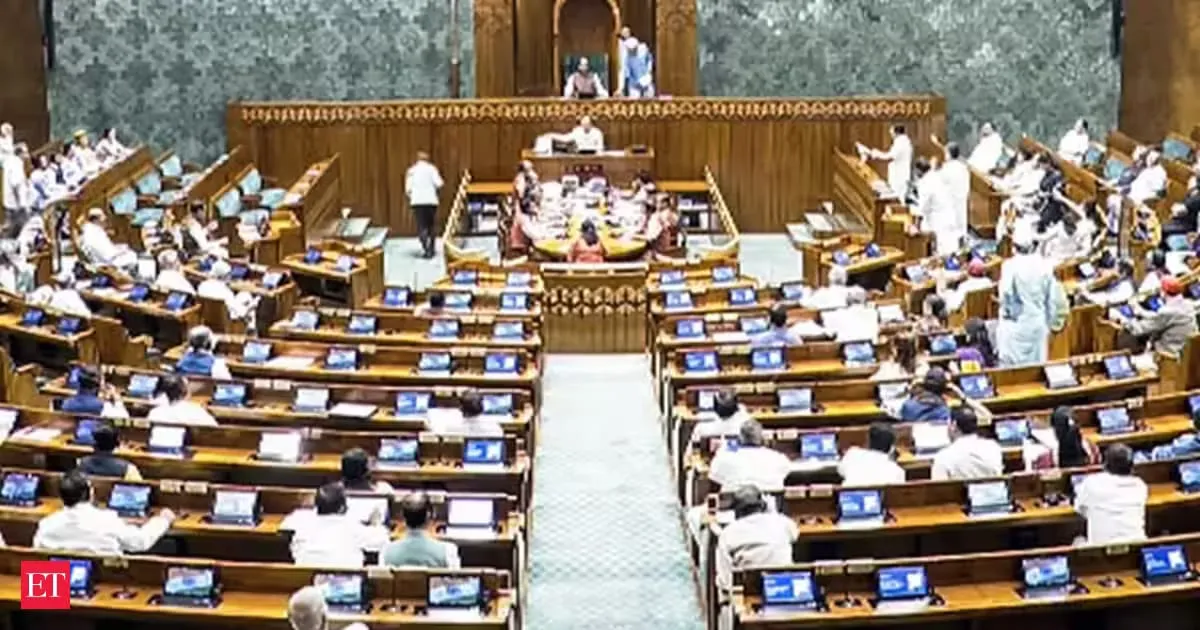 Photo: The Economic Times
The defeat of the bill, which lacked the required two-thirds majority, leaves the timeline for 33% women's reservation uncertain and affects seat allocation and delimitation.
 Photo: Cyrill, Pexels
The new law implements Budget 2026 tax measures and amends the minimum tax framework, affecting companies and individual taxpayers operating in Singapore.